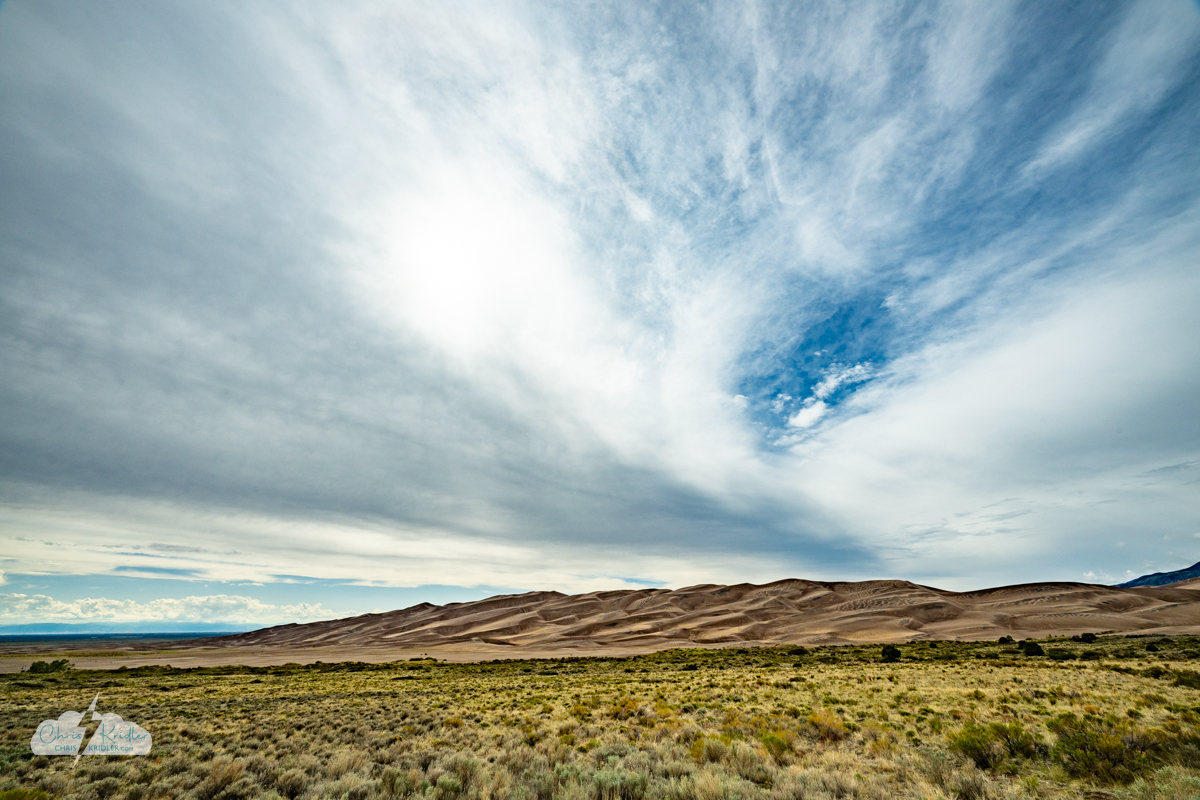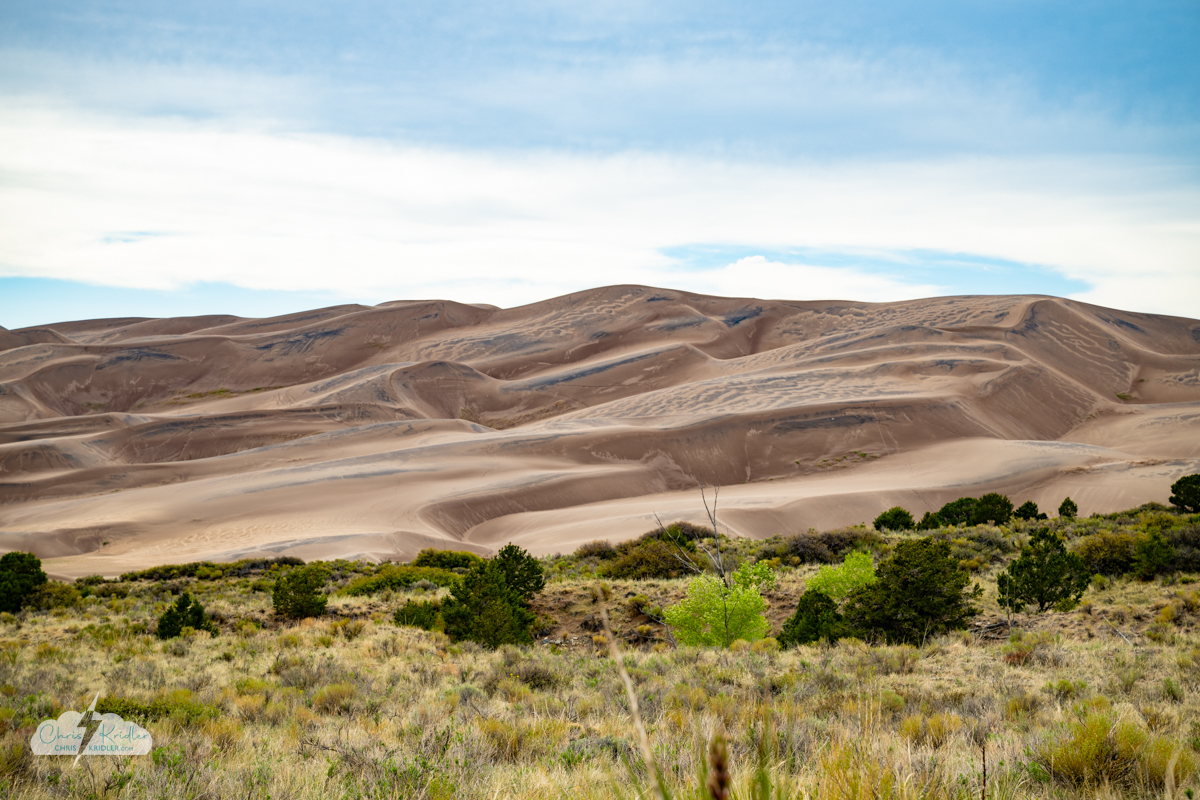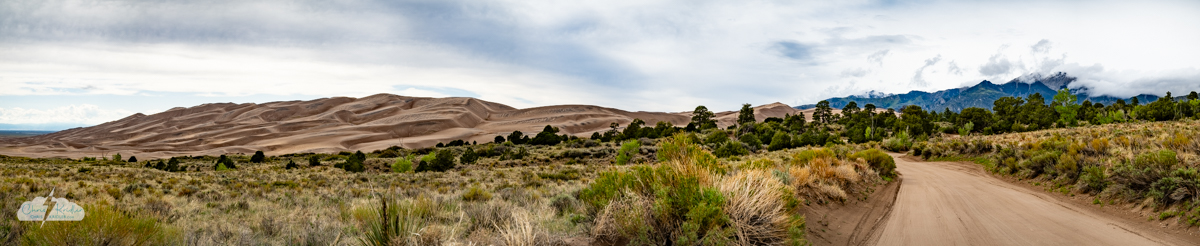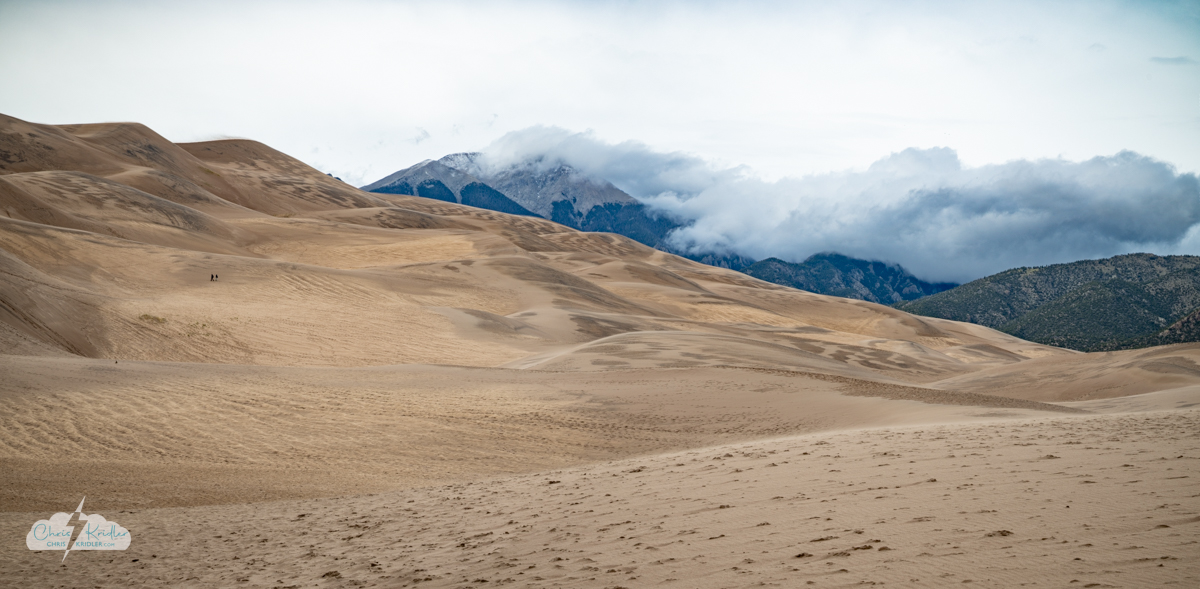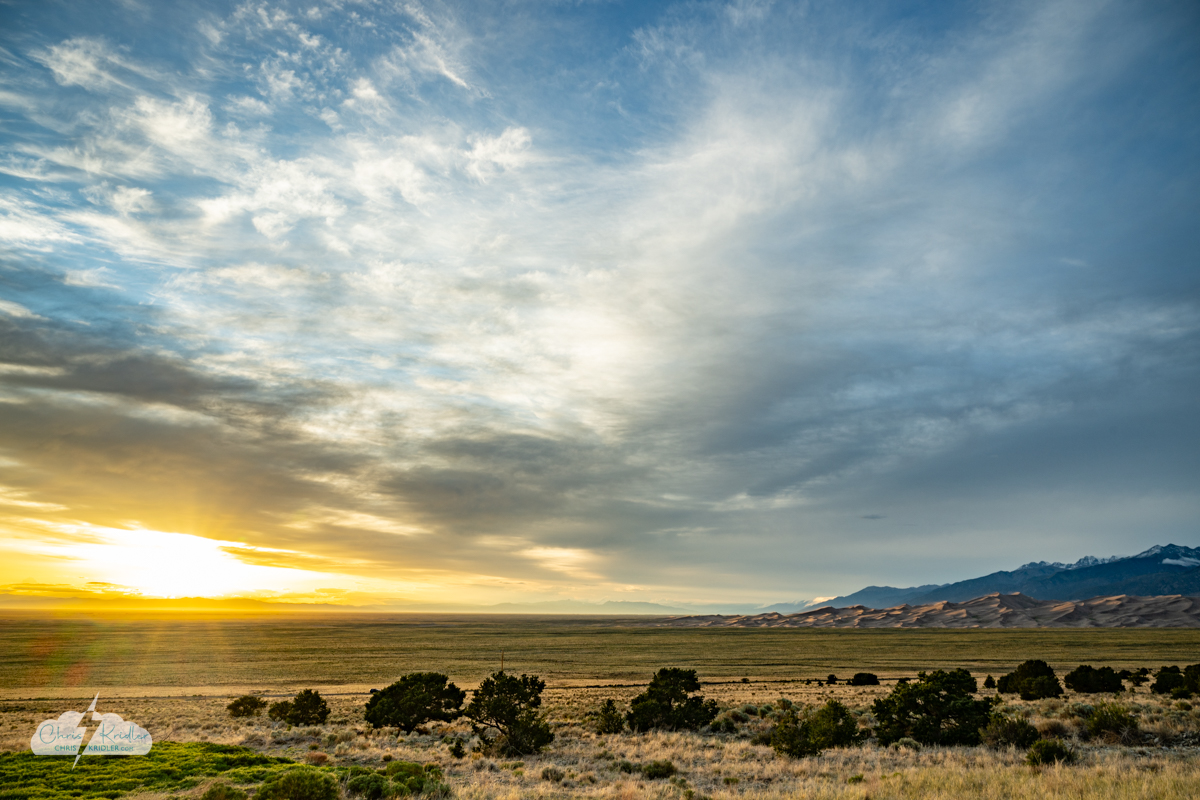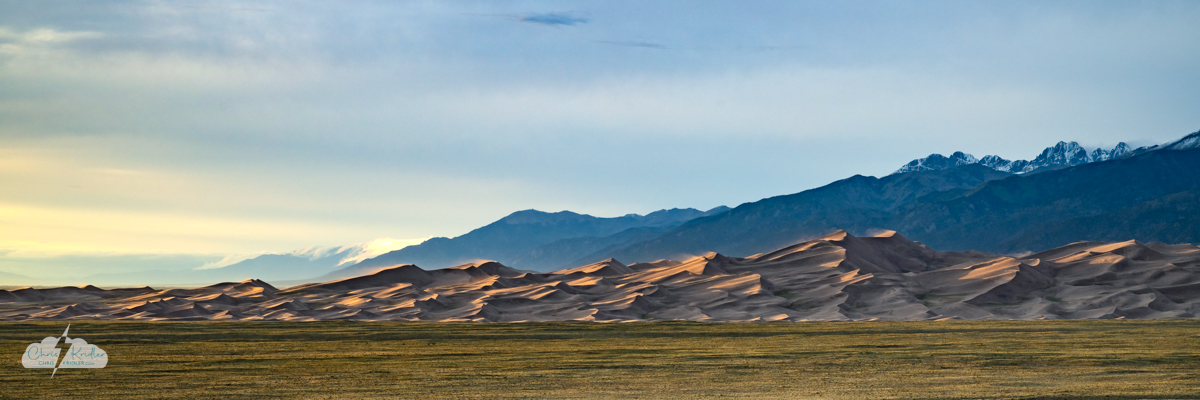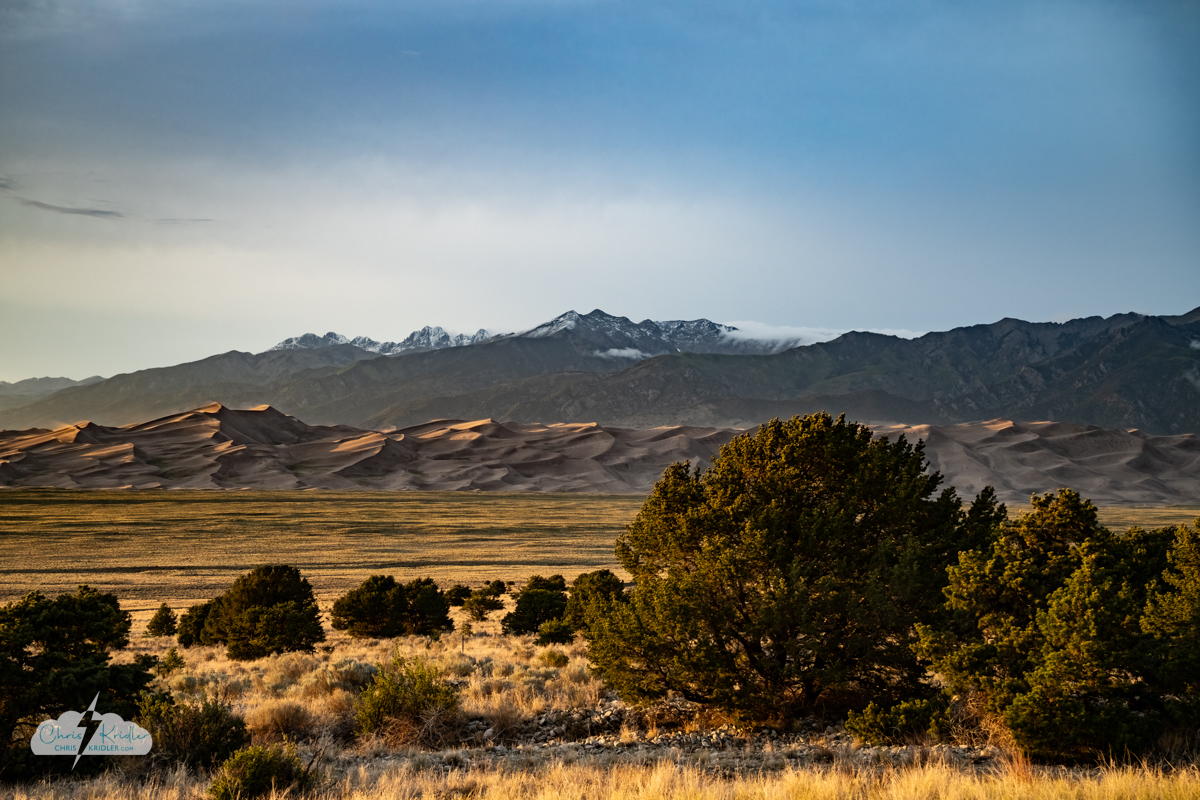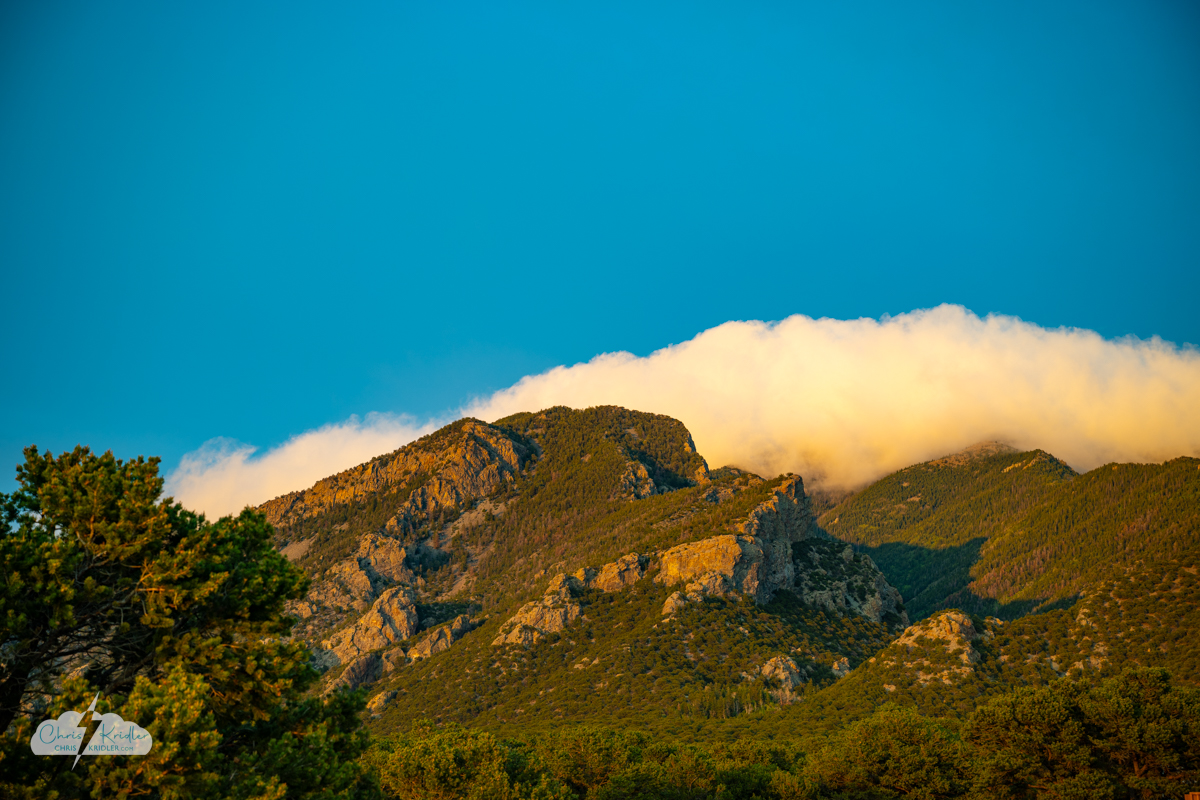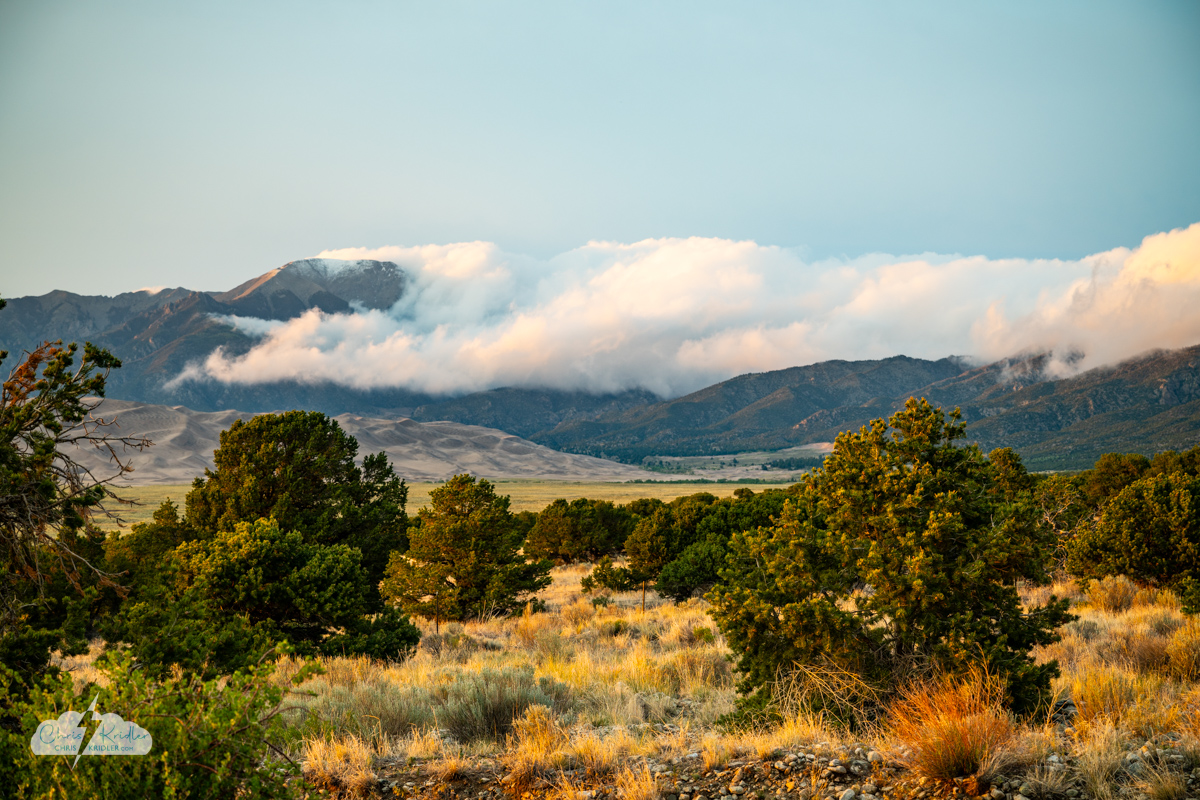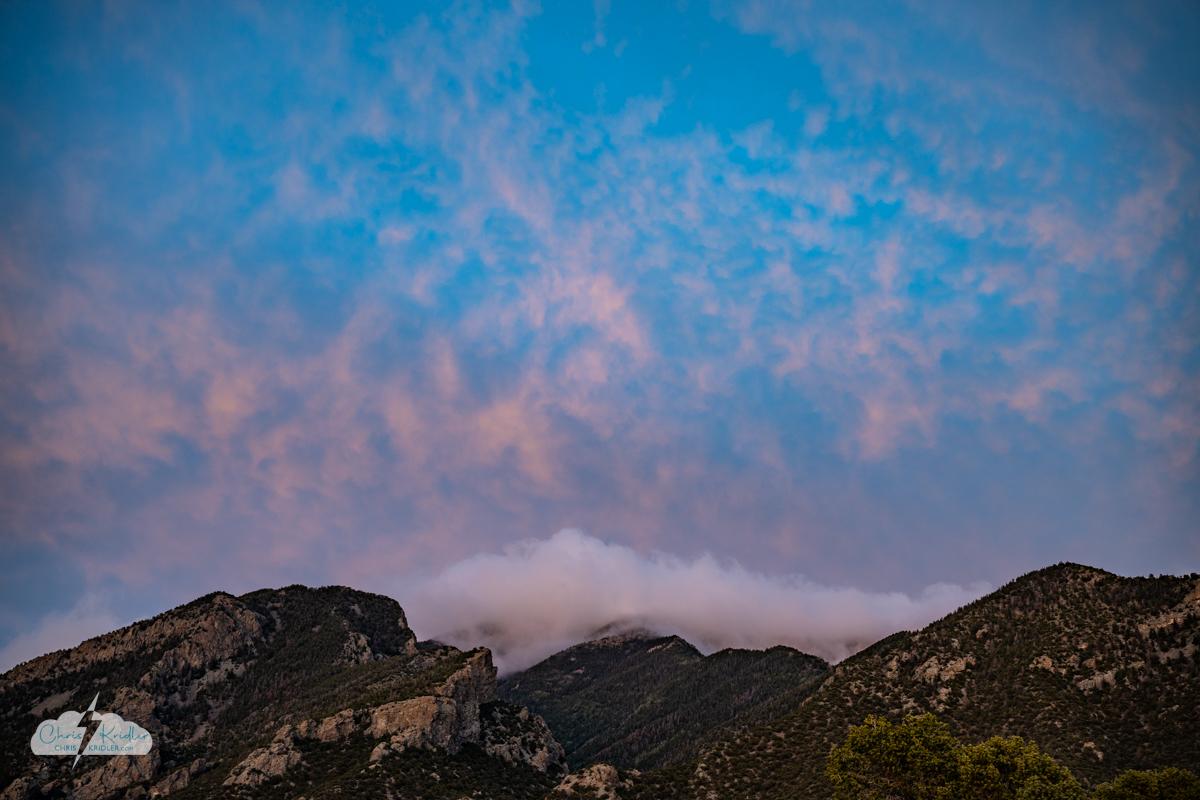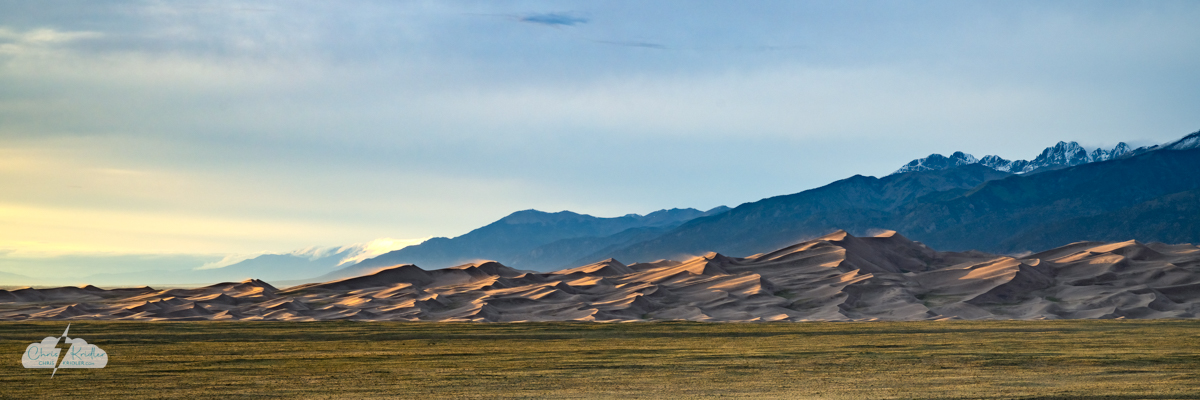
A panoramic crop brings out the detail of the dreamy dunes at sunset. Click on the photo to see a larger version.
On May 27, we woke up at our cute vintage hotel in Santa Fe, enjoyed their lovely fresh breakfast and wrote some postcards, then headed north toward Colorado and Great Sand Dunes National Park.
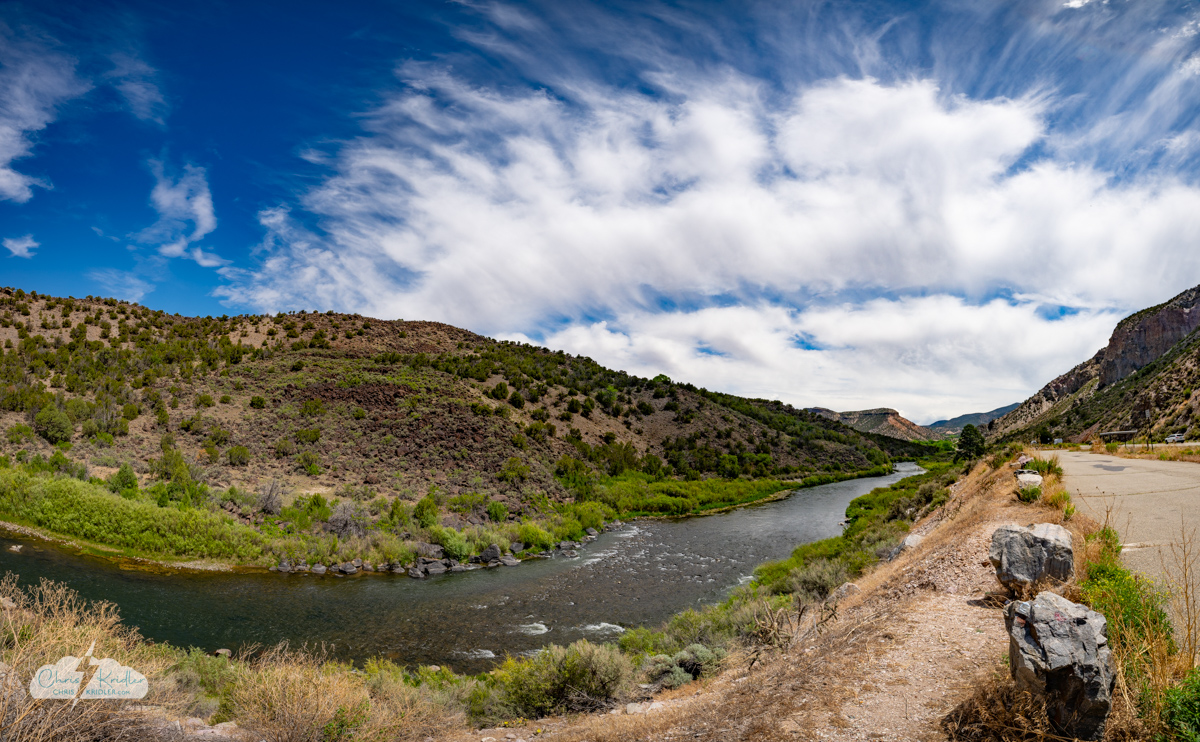
We made a stop in Taos for an oil change and a quick spin around the touristy downtown. As we headed north, I loved the gorgeous drive along the Rio Grande and through the wide open valley along Colorado 169 (with, incidentially, almost no cell service). It was clear why this area draws stargazers. I only hoped we would get some clear skies for photography.
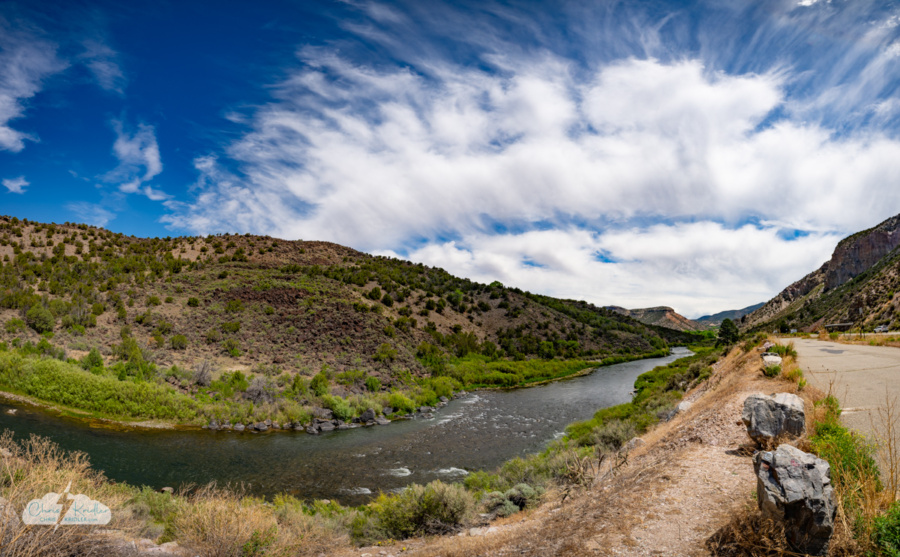
The Rio Grande runs through New Mexico on its way south, and we paralleled it for a while.
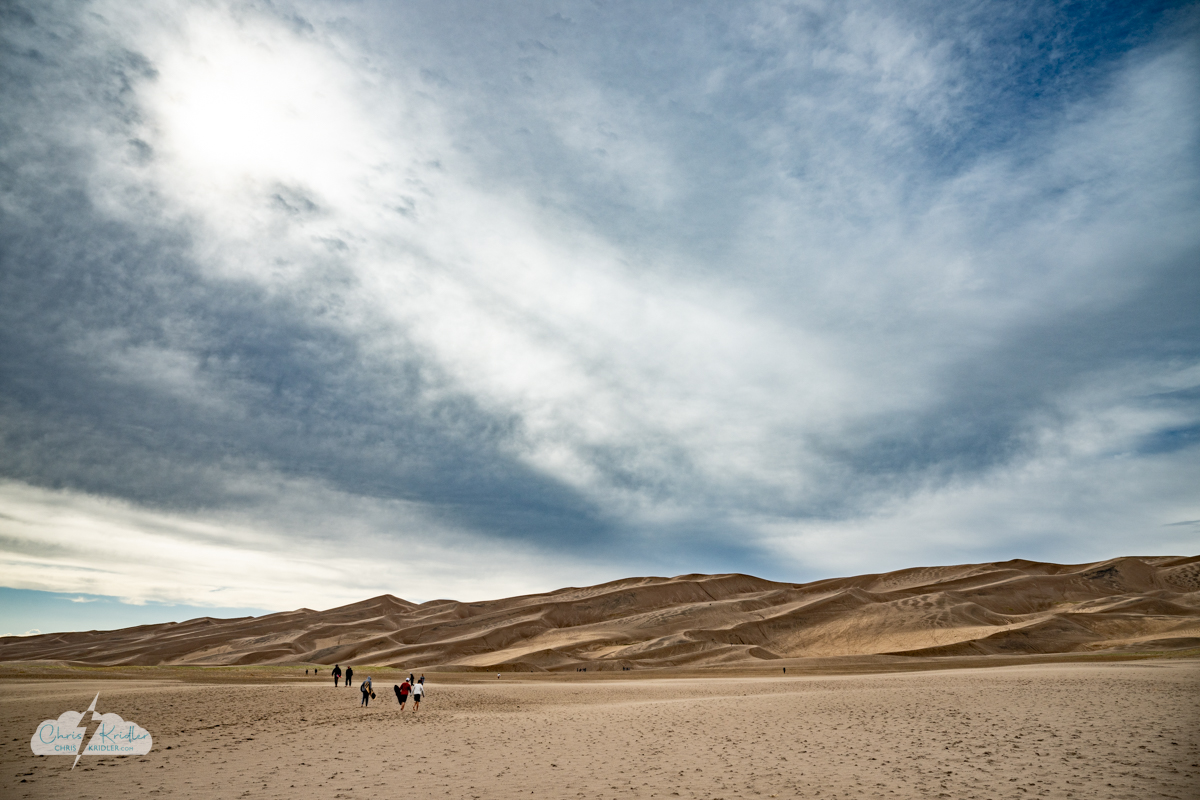
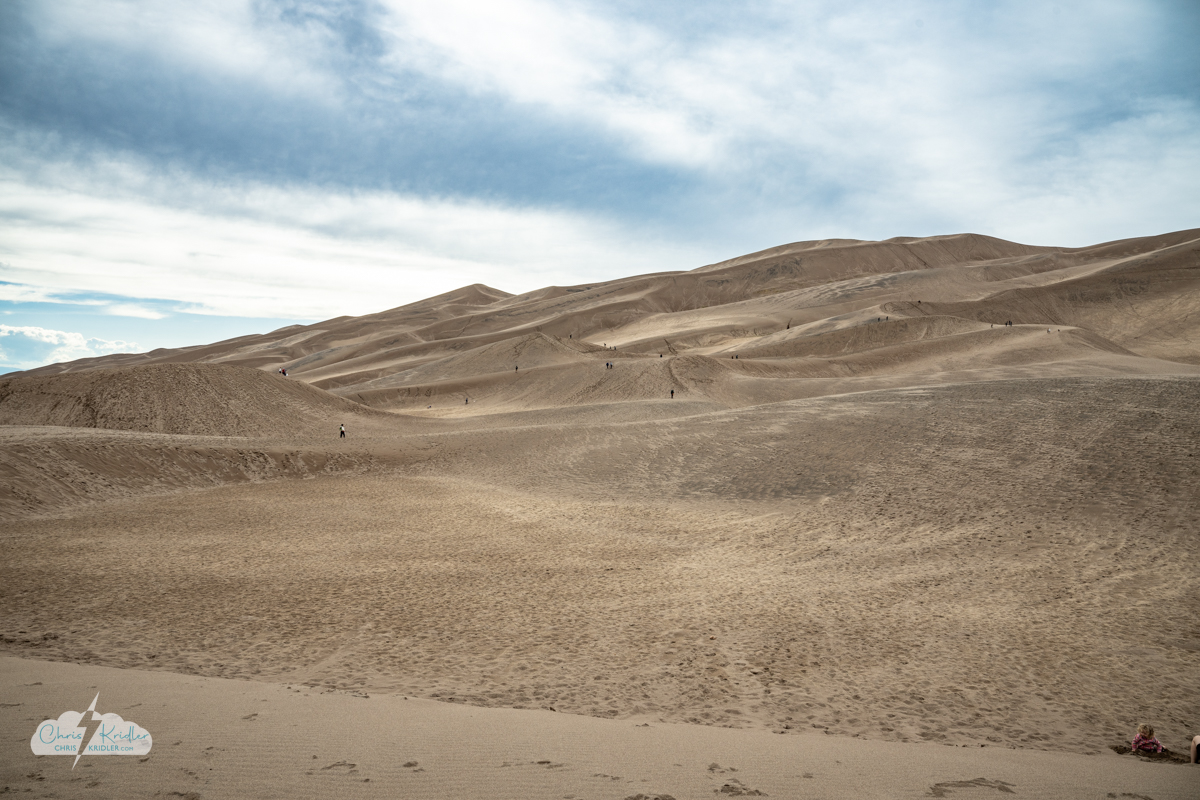
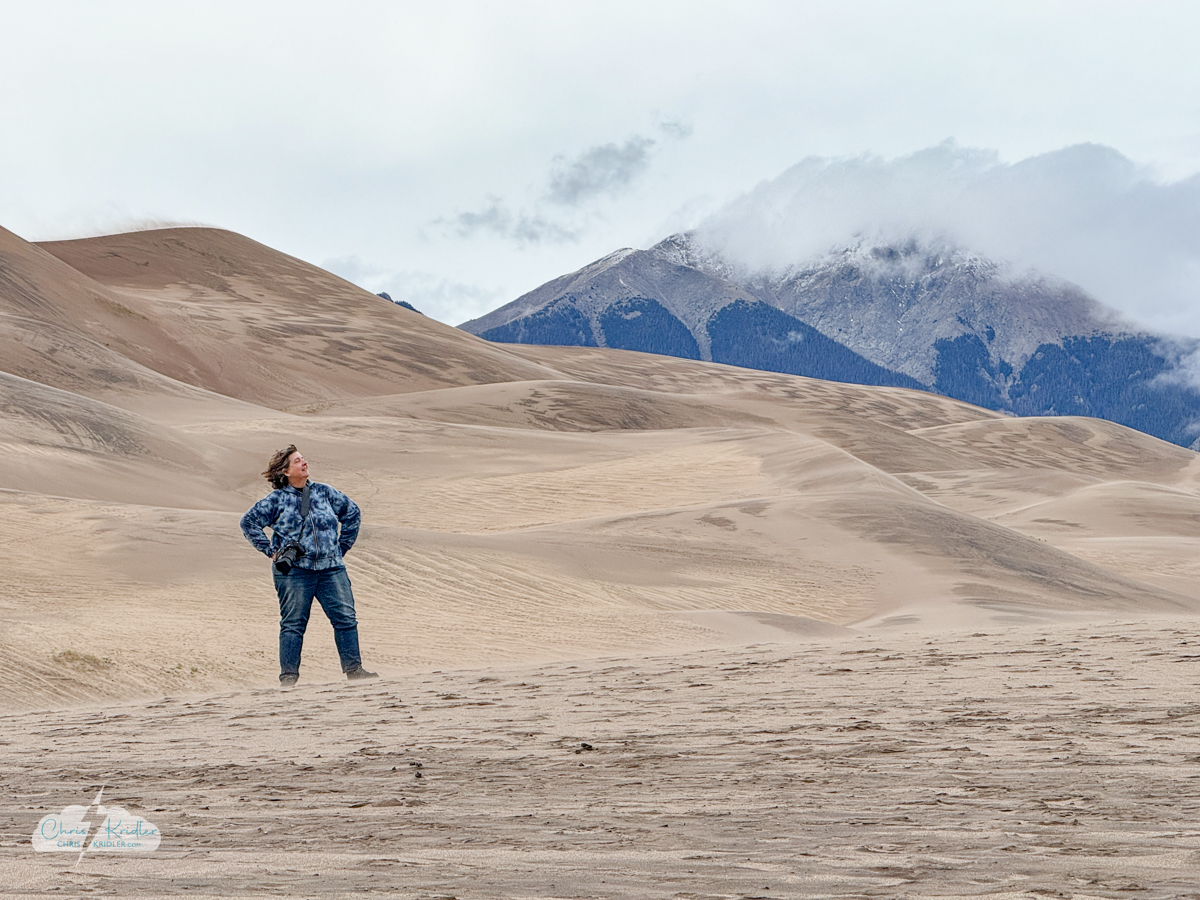
After checking in at our hotel near the edge of the national park at Mosca, Colorado, we headed into the park. We did some preliminary exploring, seeing mostly deer and RVs, then parked and joined the throngs of other tourists walking out onto the sand. Some had boogie boards for riding the dunes (which felt wrong for a national park, but since the sand keeps moving, I suppose no harm done). Some folks had dogs. Some were prepping for overnight camping. And some were just walking and fighting the wind, as we were.
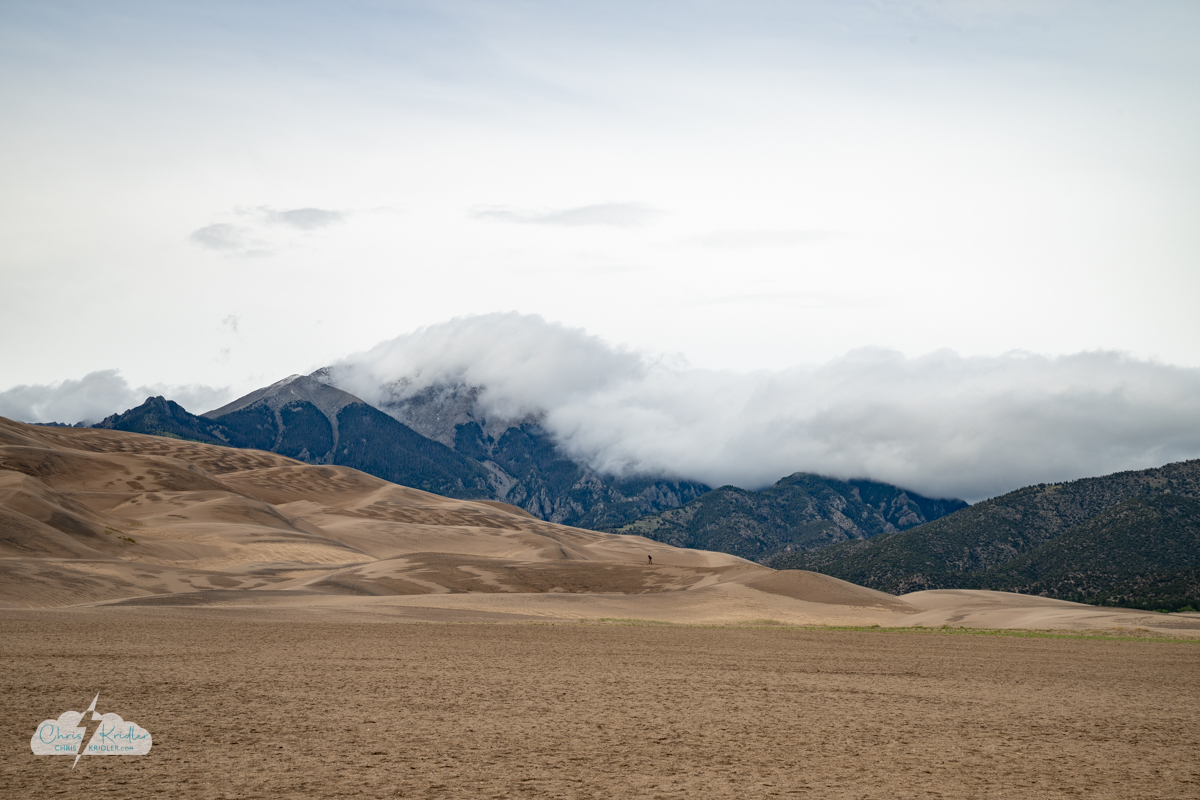
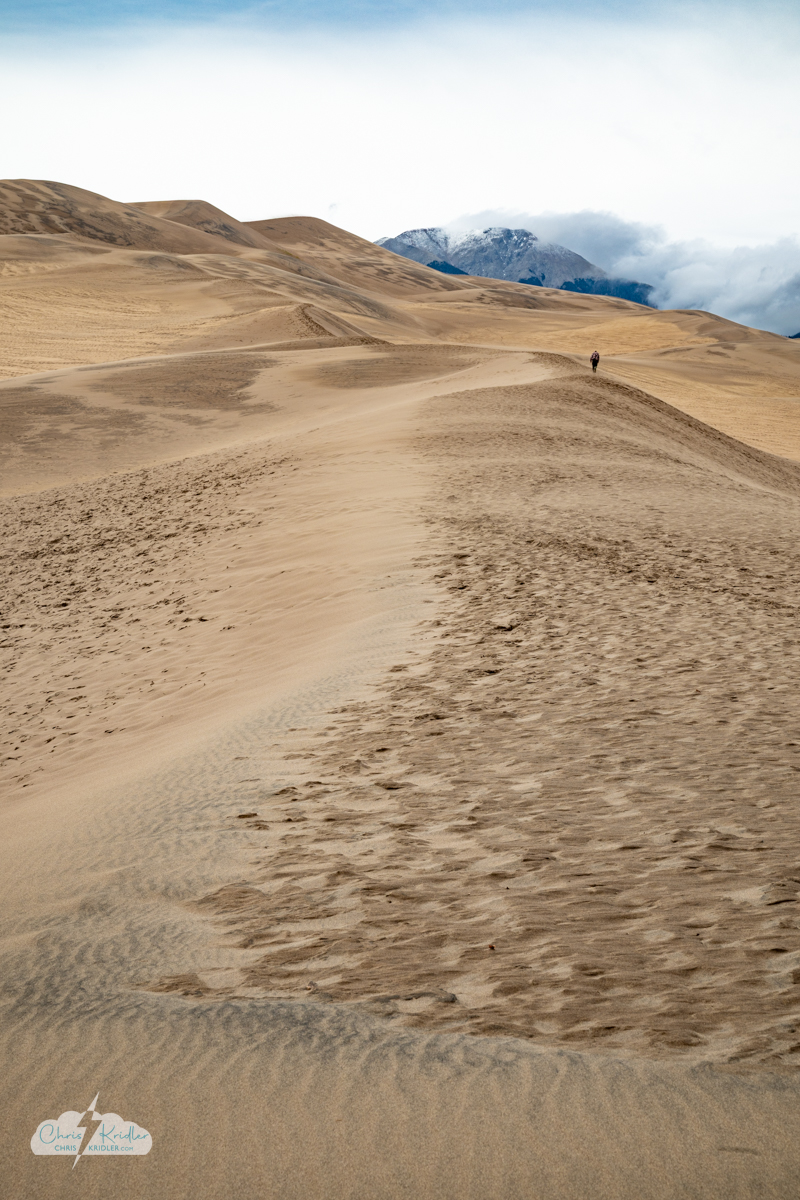
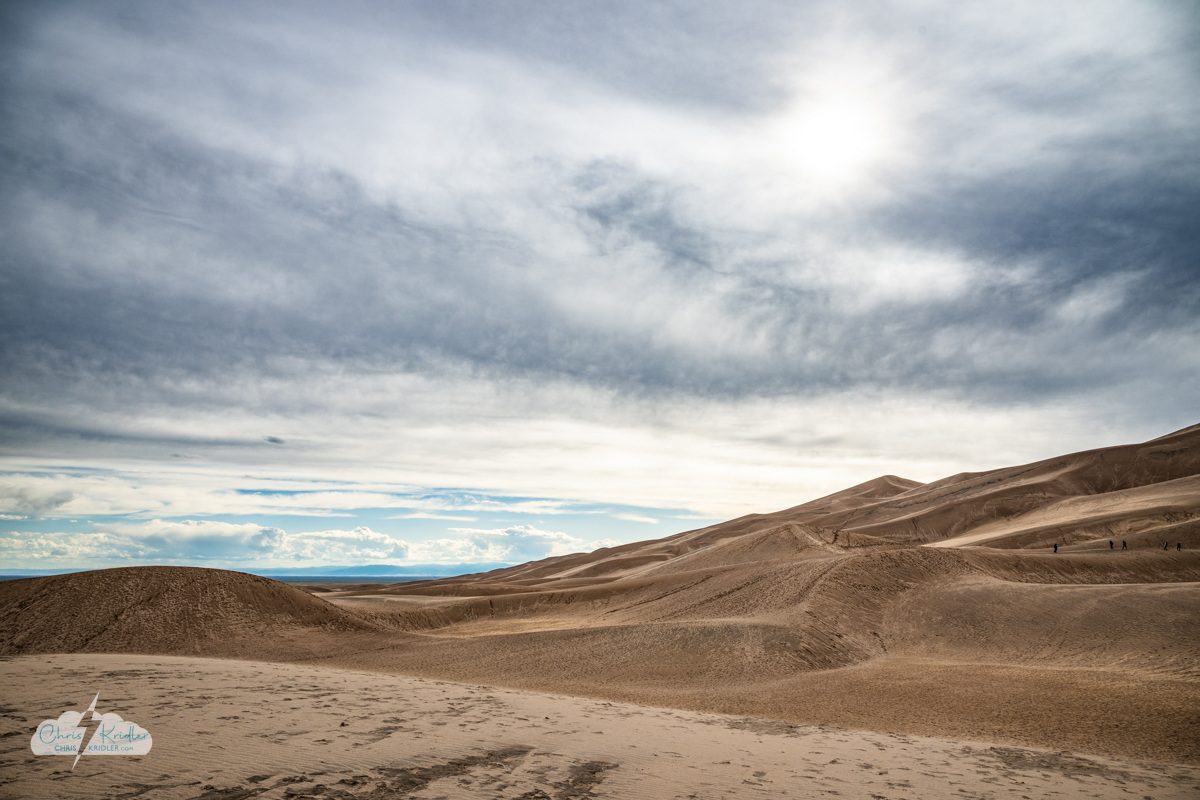
We didn’t get too far into the dunes given the tough slogging and our late visit, but it was enough to get a feel for them. It was strange, really, being surrounded by these steep peaks of dark sand in a totally unexpected place – on the east side of a valley, up against the Sangre de Cristo Mountains.
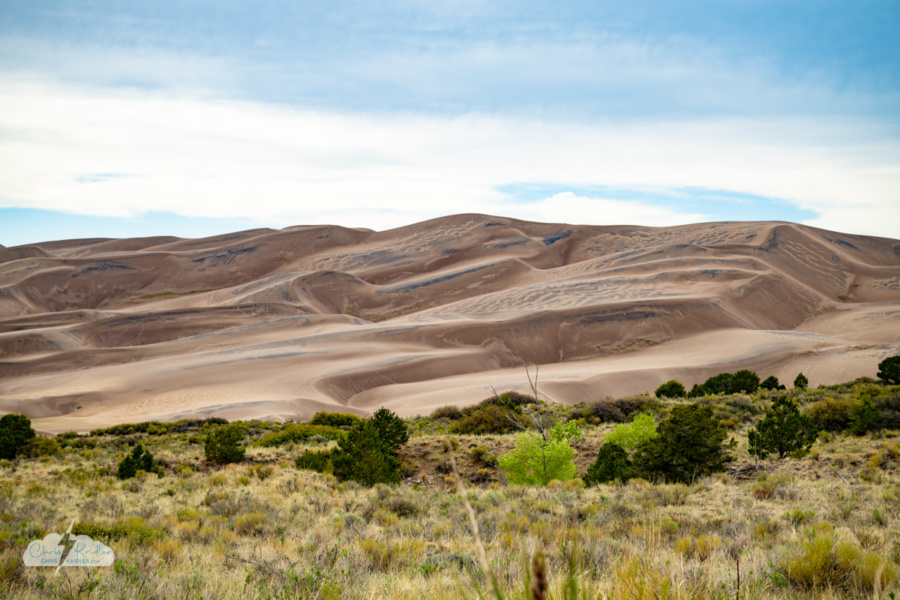
This place looked like a movie set!
The dunes’ formation began about 400,000 years ago. The valley filled with sediment. Melting glaciers filled the valley with streams and lakes that deposited the sand. Prevailing winds pushed the sands up against the mountain range. After more glaciers and more melting, and with no trees and bushes to stop them, the dunes moved across the valley. As winds also flowed down off the mountains, as well as from the west, the sand and dunes were pushed higher and higher. And all of a sudden, we have the set for Lawrence of Arabia. (Not really, it just looks like that.) You can see all this action animated in a National Park Service video.
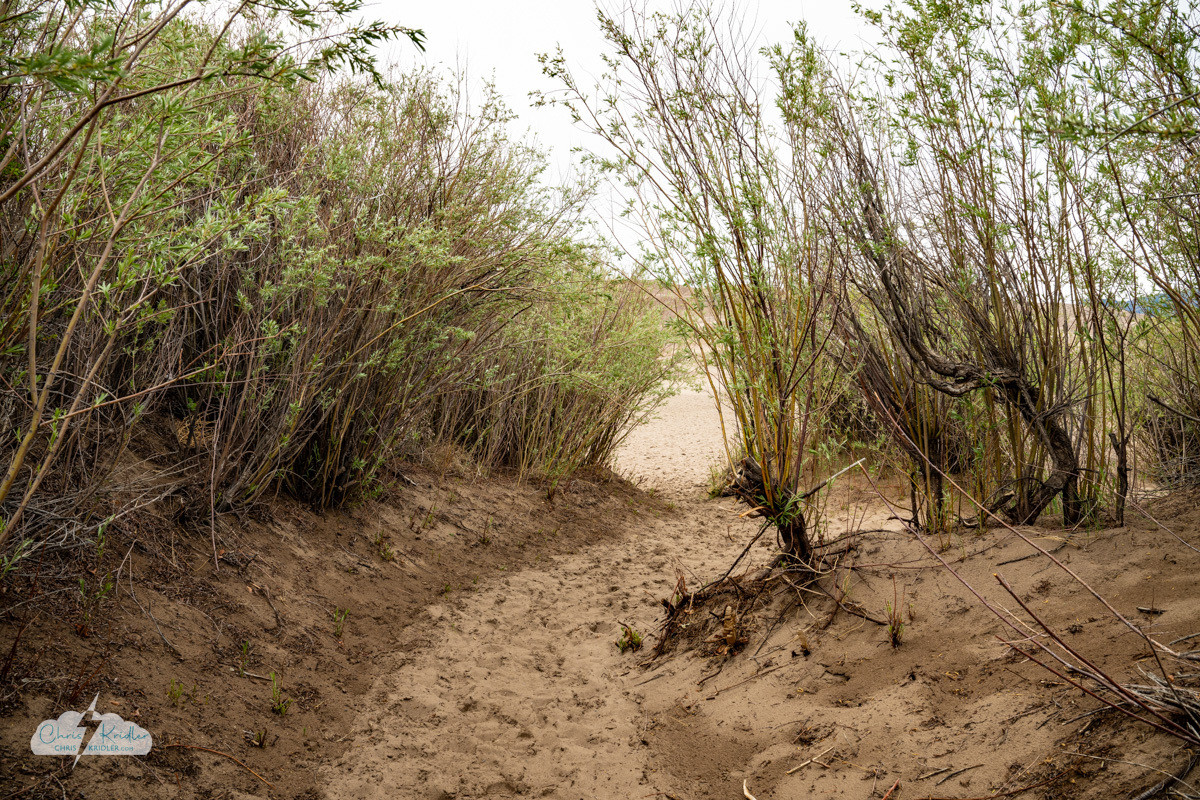
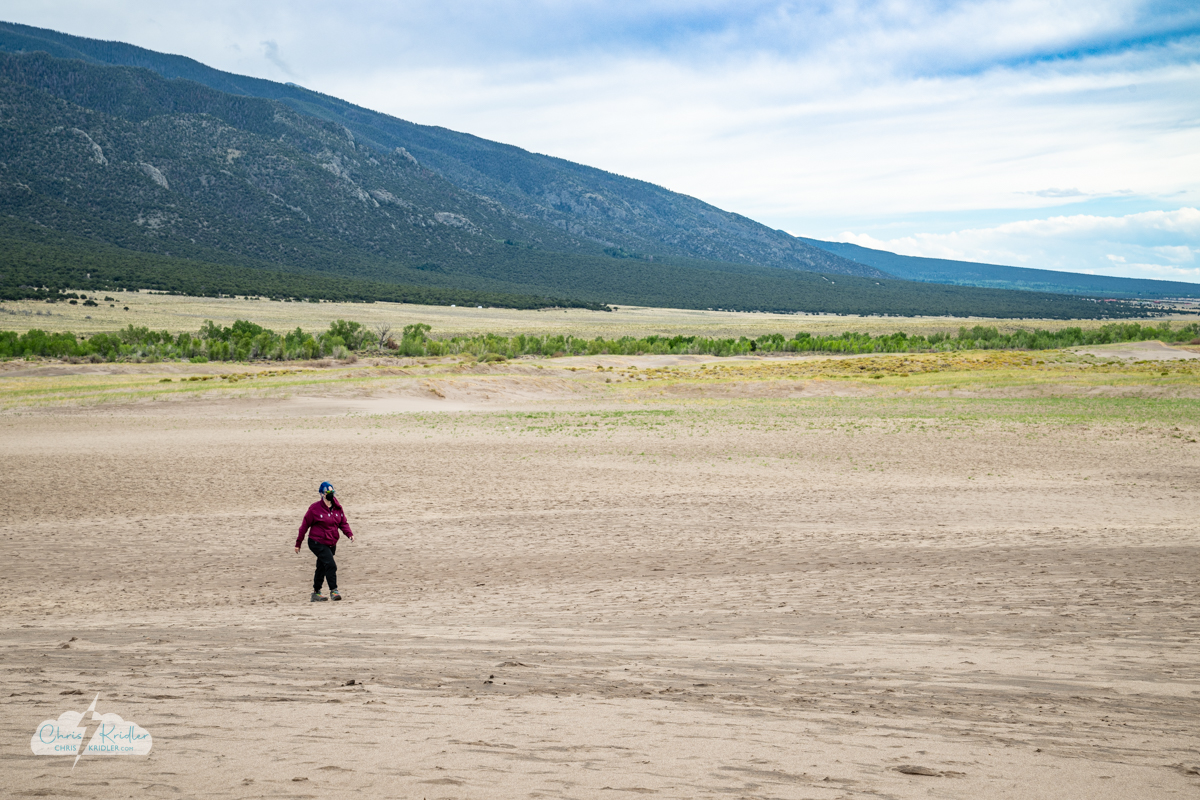
In the spring, Medano Creek usually flows along the edges of the dunes, so a shallow water crossing is required. But we had no water to cross – just a bit of a sandblasting in the wind.
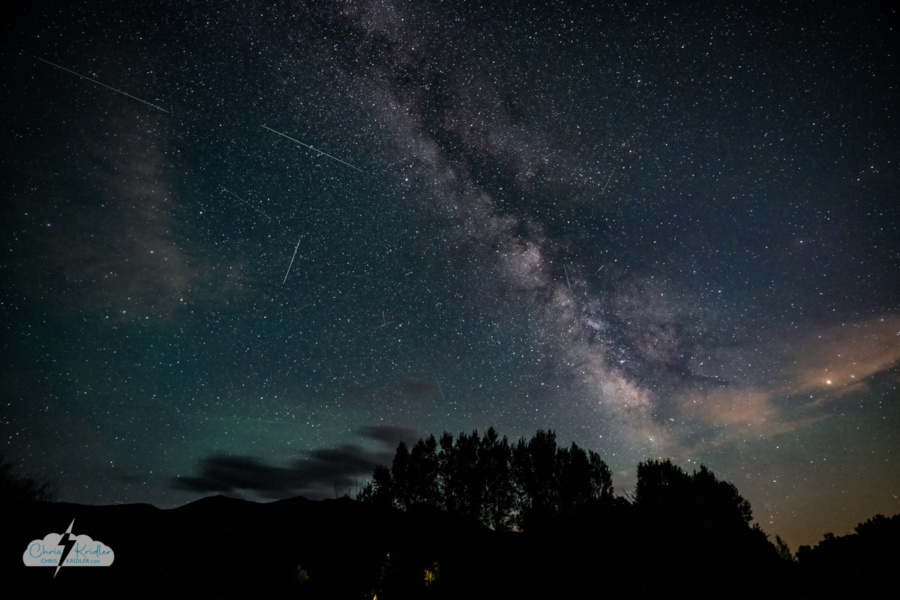
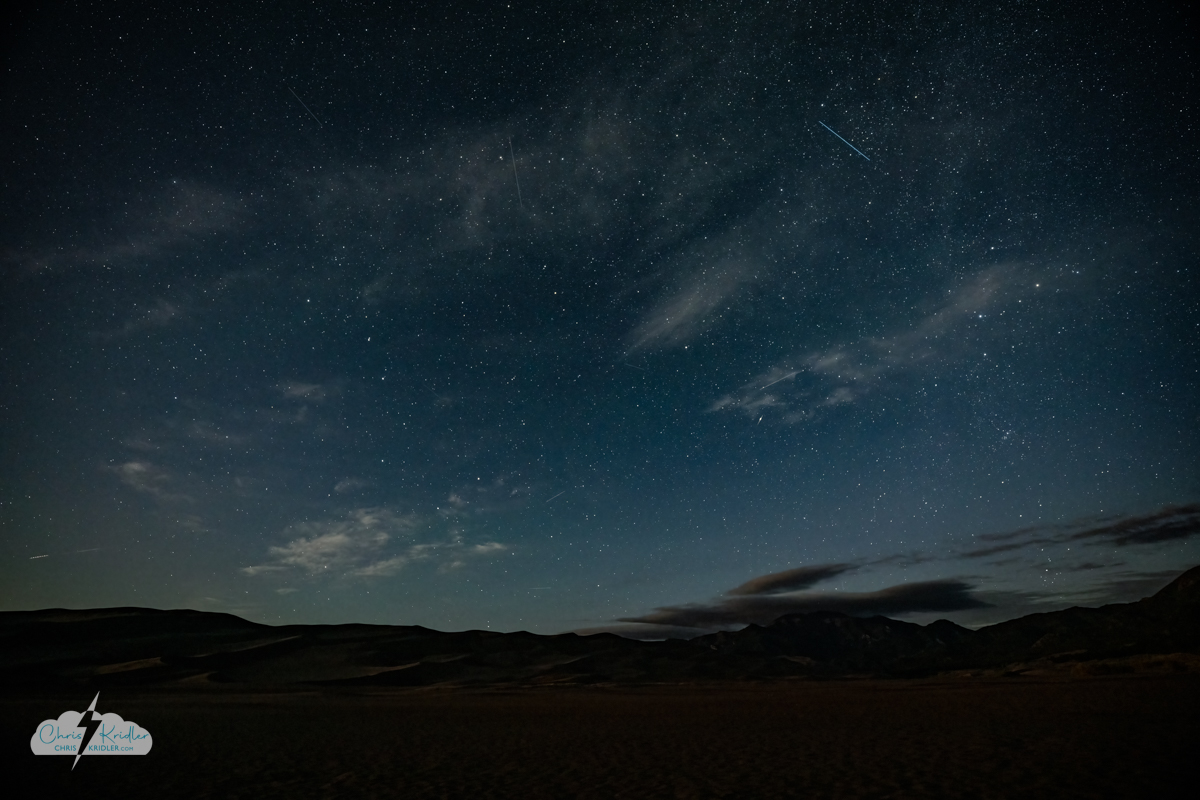
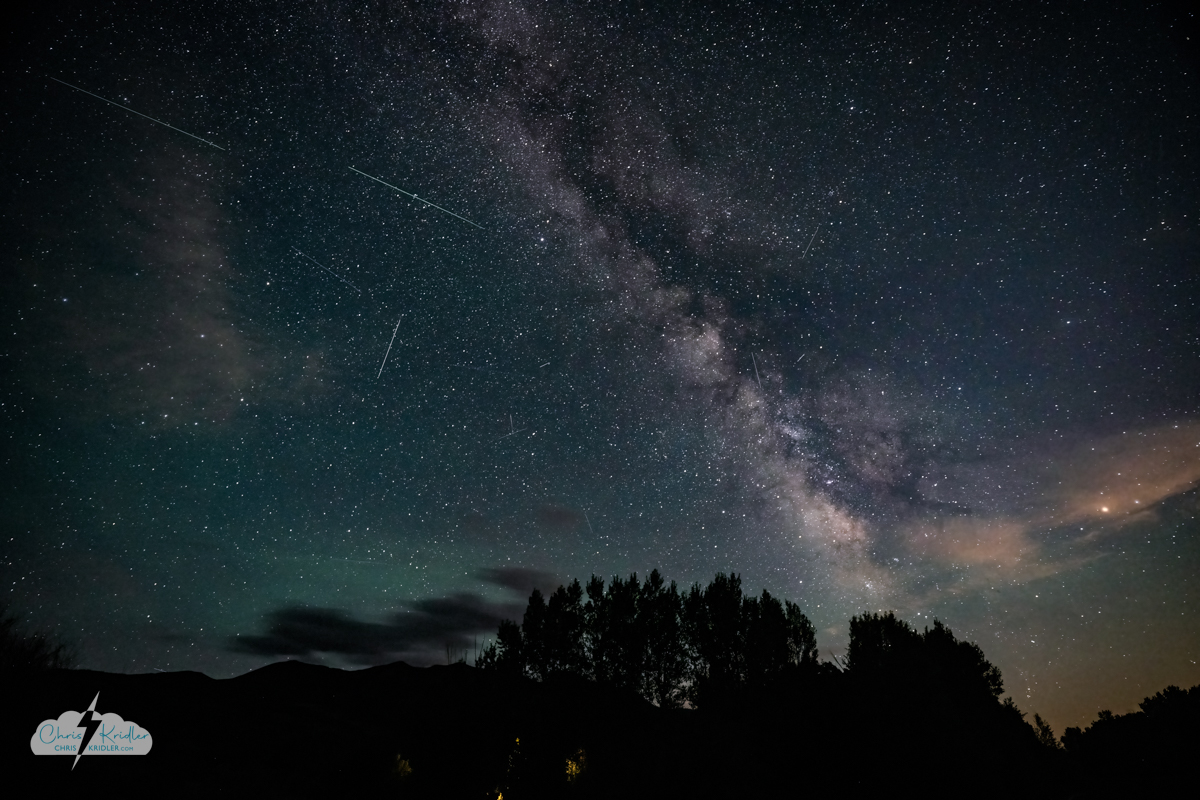
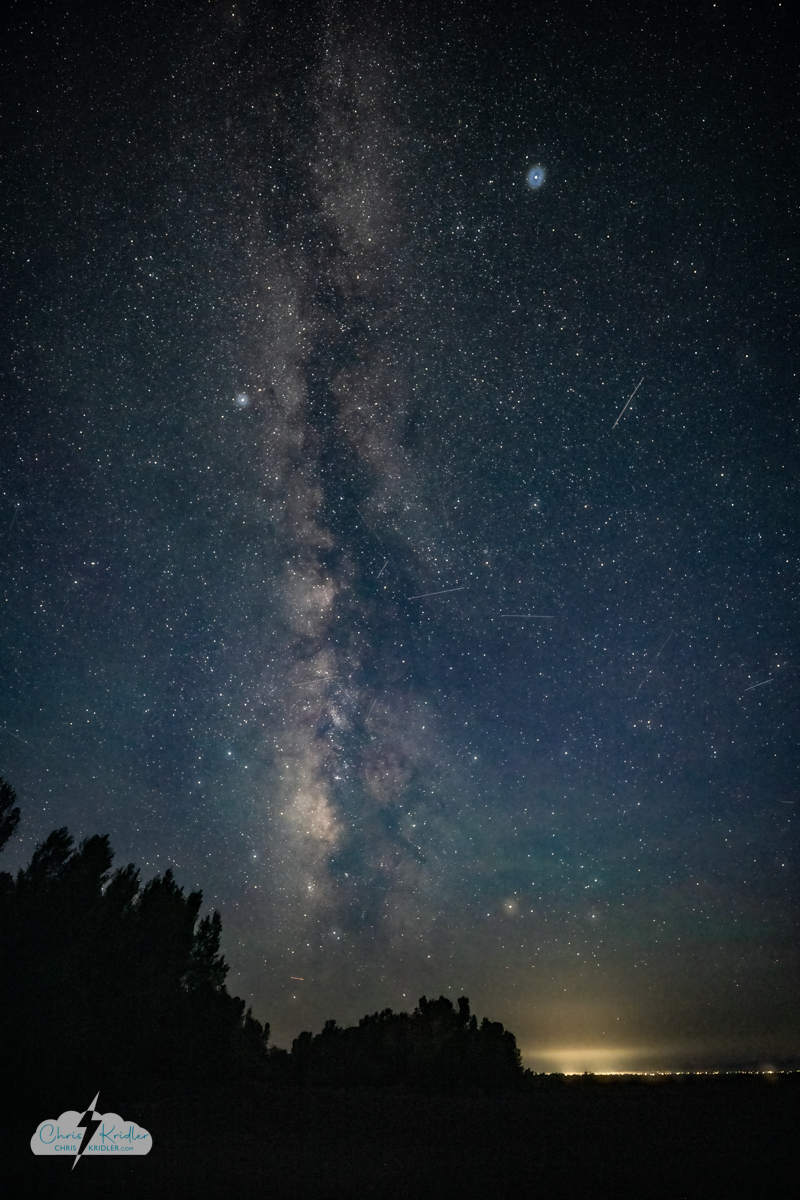
Lots of satellites cross the sky as the Milky Way moves overhead.
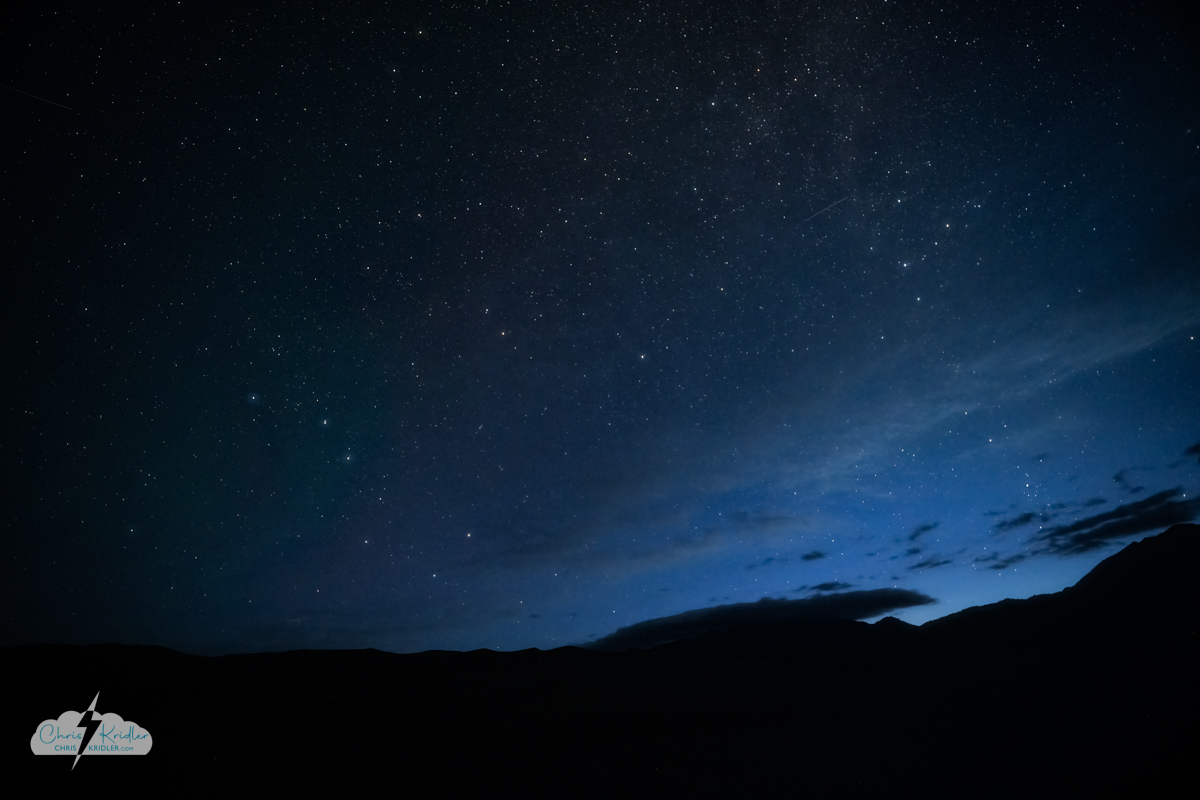
I was tasked with waking up later at moonset – though I or the Internet was off by at least an hour – to see if the clouds had cleared enough to show us stars. I deemed it close enough and had to wake up Alethea. So we headed into the park again. The moon was declining toward its bed but hadn’t gotten there yet, and the light and wispy clouds and haze made astrophotography challenging.
Eventually, though, it got dark enough that we saw the Milky Way arcing overhead. And my star photos were full of the streaks of satellites.
There’s no place that’s truly void of technology, I guess. But this is a great place to see stars if you get a nice clear, moonless night.
We stopped in the park once more in the daytime, made the de rigueur raid on the gift shop, recorded a video update and hit the road for eastern Colorado and a meetup with Jason and his family.
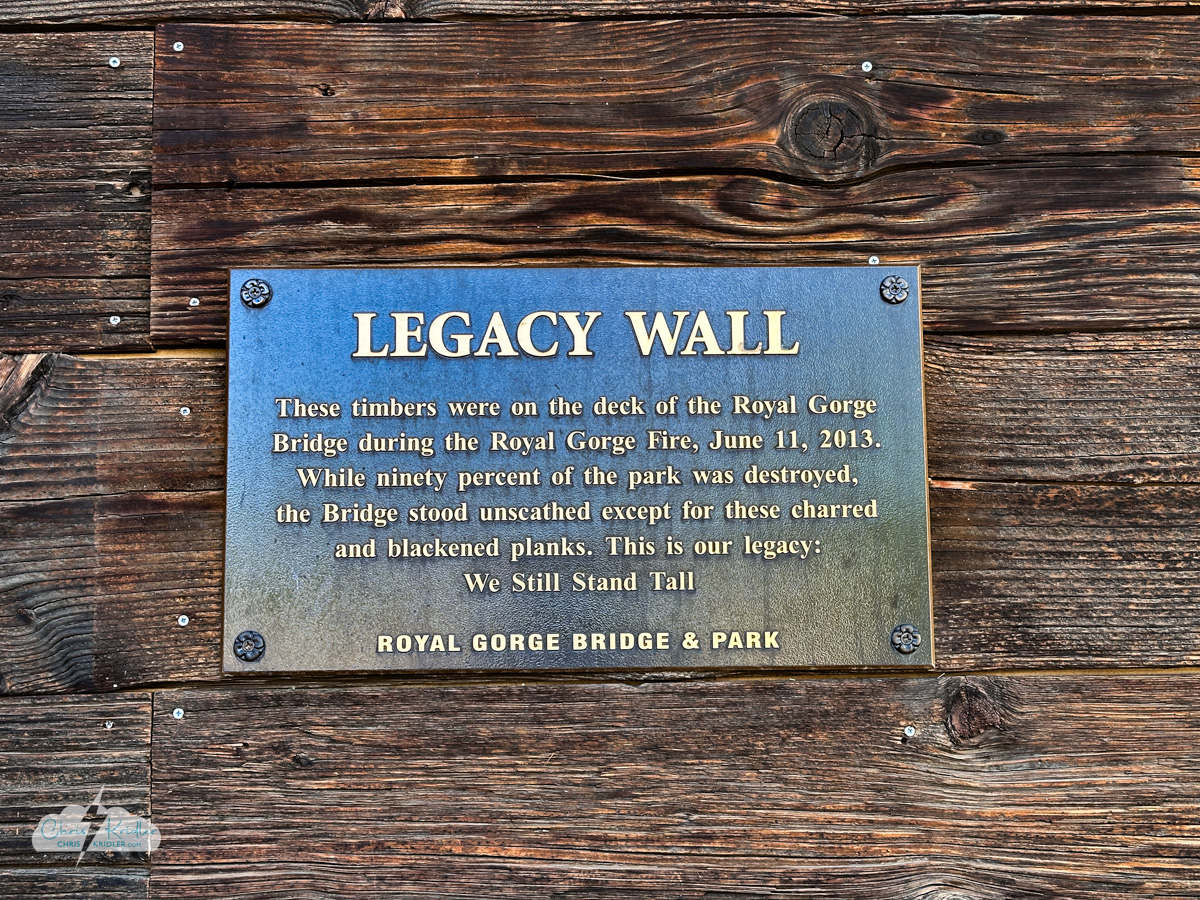
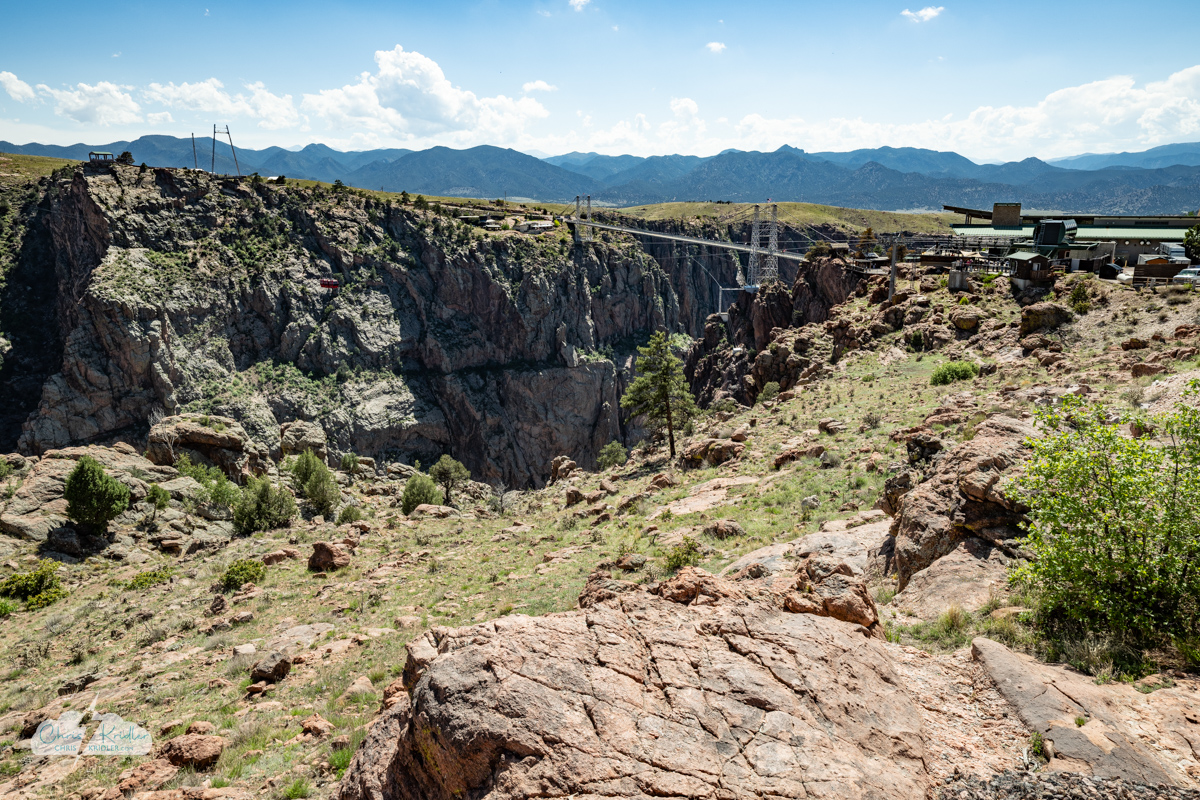
We crawled up to the Royal Gorge, balked at the admission prices and looked at it from the parking lot, then twisted on east to Denver through the wonderful mountains. Why do I live in the subtropical flats again?
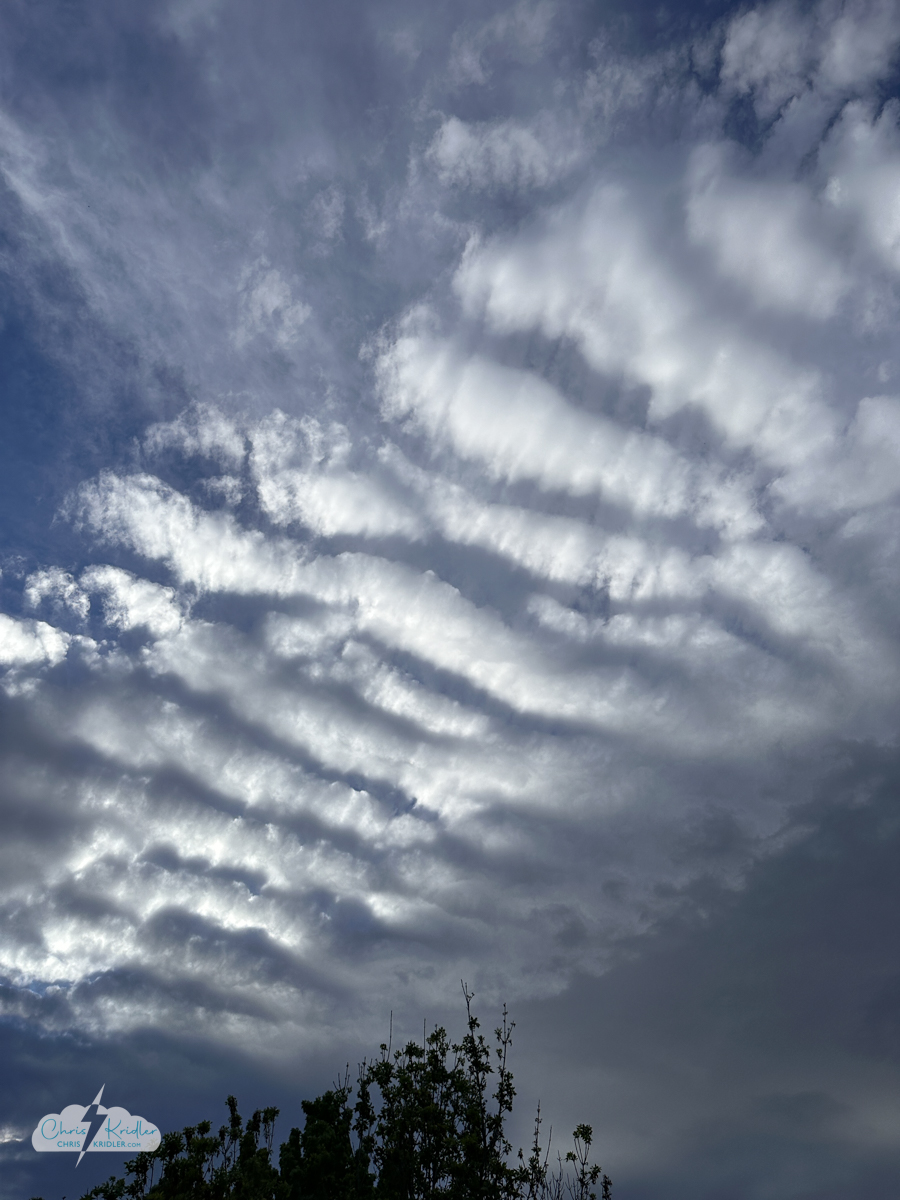
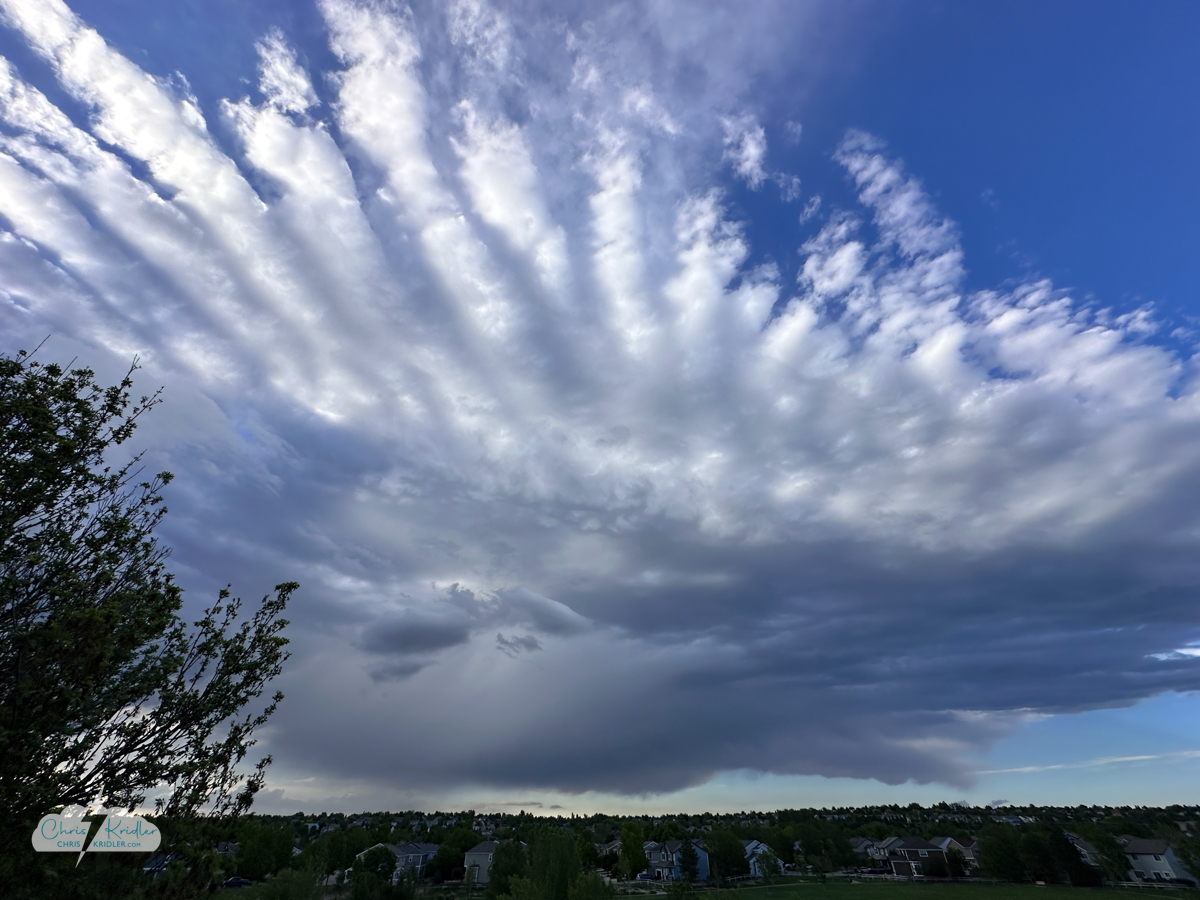
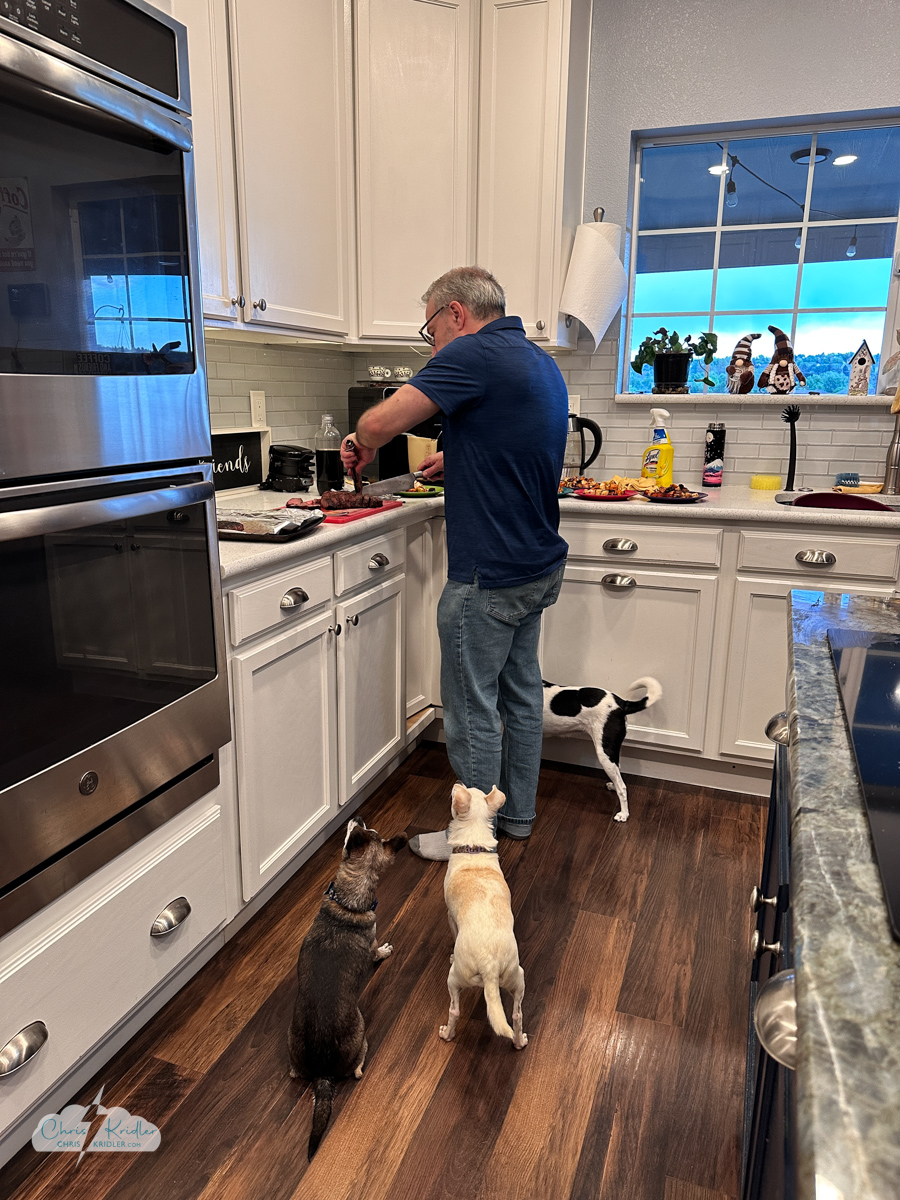
We ended the evening with great friends, great steak, and a subtly stormy twilight … and plans to chase storms tomorrow.
Click on any photo to see a larger image and start a slide show.